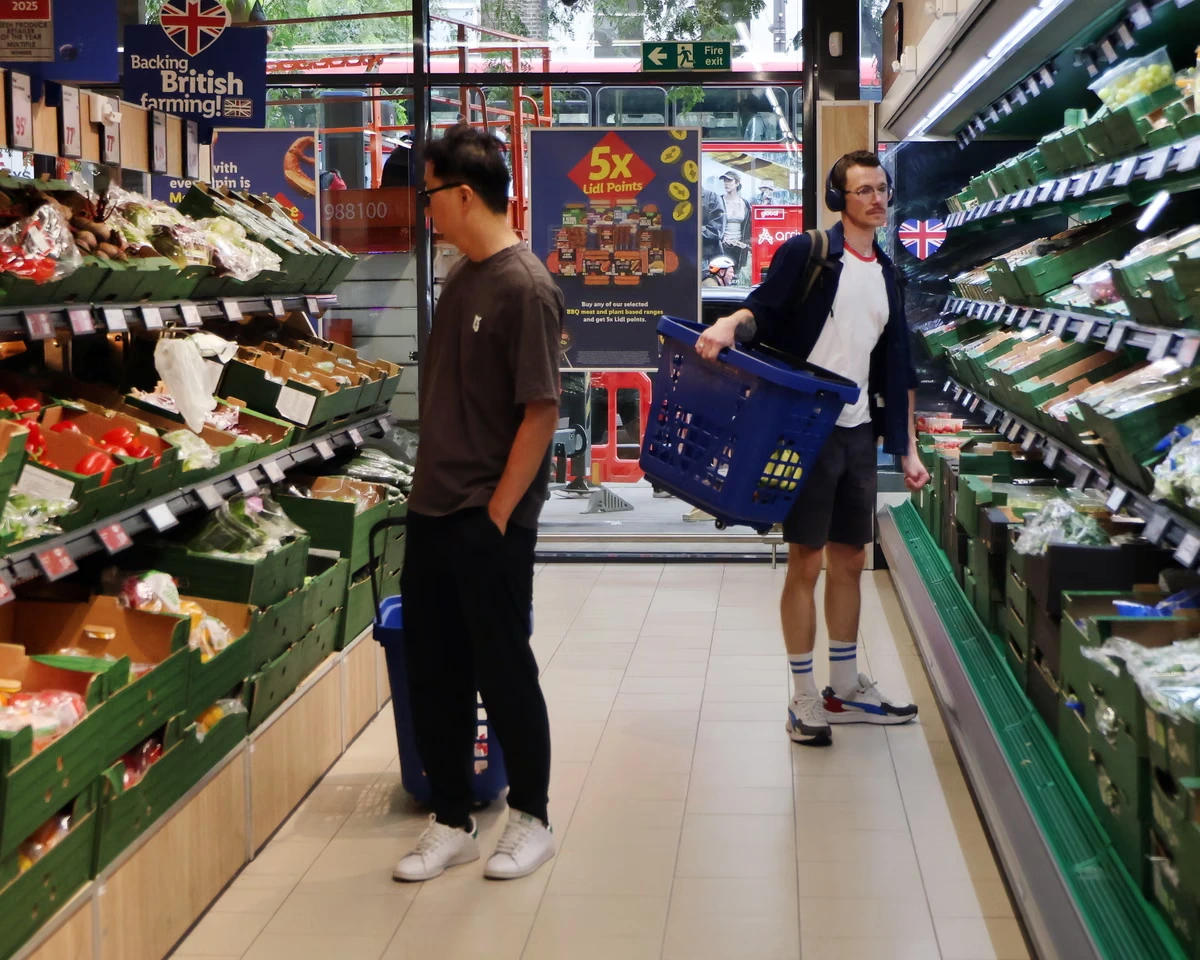
Food price inflation in the UK could hit 5% next year, the Bank of England has said, despite rising less sharply than feared since the onset of the Iran war.
The deputy governor Clare Lombardelli told MPs on the cross-party Treasury select committee: “Food price inflation is coming in under what we expected [it] to be, and in fact under what the industry expected it to be.”
But she said the Bank expected food price inflation to rise sharply from the current level of about 1.3%. “We think that … it will go up to 3 to 5% in the middle of next year. I mean, obviously that’s quite uncertain, but that pressure is there,” Lombardelli said.
Lombardelli was being questioned by MPs alongside other members of the Bank’s monetary policy committee (MPC).
The MPC raised interest rates by a quarter-point to 4% at its last meeting earlier this month to tackle above-target inflation, and suggested further action could be necessary.
Andrew Bailey, the Bank’s governor, said the MPC was also monitoring the potential impact of this year’s unusually large El Niño weather event on future food prices.
“There is uncertainty around this. You know, we still don’t know what the impact of this El Niño effect is going to be, for instance, because it will take time for it to manifest,” he said.
Surging oil and gas prices have pushed up the annual rate of inflation, which hit 3.6% last month, with the cost of petrol and diesel up by more than 33% over the past year.
But so far there have been fewer knock-on effects beyond energy prices. Food inflation has fallen well short of the peak above 17% seen in 2023, when Russia’s invasion of Ukraine exacerbated the supply squeeze as the global economy emerged from the Covid-19 pandemic.
Catherine Mann, an external member of the MPC who voted for a half-point increase this month, pointed to fierce competition in the food retail sector as a reason price rises had been constrained.
“We all go shopping ourselves. I can say that Aldi price match in my stores is apparent. Now, it wasn’t apparent four years ago. So that’s, I think, important,” she said.
Oil prices have fallen sharply since the Democratic party’s sweep in the US midterms brought hopes of an end to the Iran conflict, and as alternative sources of supply start to come onstream.
Bailey said if these lower prices continued, they would moderate the Bank’s predictions for UK inflation – which it had expected to peak at almost 5% next year.
“The prices are volatile … if these current prices were to stay what they are, the peak of inflation mechanically would be lower,” he said. However, Bailey and other MPC members underlined that some inflationary pressure for next year is already baked in – pointing to the 26% rise in the price cap for household energy bills due in January as an example.
The two-hour hearing underlined the divisions within the committee. The more dovish Swati Dhingra suggesting she saw this month’s rate rise as a one-off “insurance” measure, while Mann said she feared the MPC had undermined public confidence by failing to move more aggressively.
Dhingra compared the muted impact of rocketing oil and gas prices this year on the wider economy with the effects of the surge in 2022 after Russia invaded Ukraine.
At a similar point in that year, the prices of 70% of goods included in the consumer price index had risen, she said – but just 20% of prices have reacted so far this year.
But Mann pointed out that inflation had now been consistently above the Bank’s 2% target for five years.
“If we let inflation expectations drift away from 2% in the longer term, then monetary policy is going to have to work harder, meaning a higher rate for longer,” she said, adding: “The optimal response is to hike more and sooner.” The MPC’s next rate-setting meeting is on 17 December.