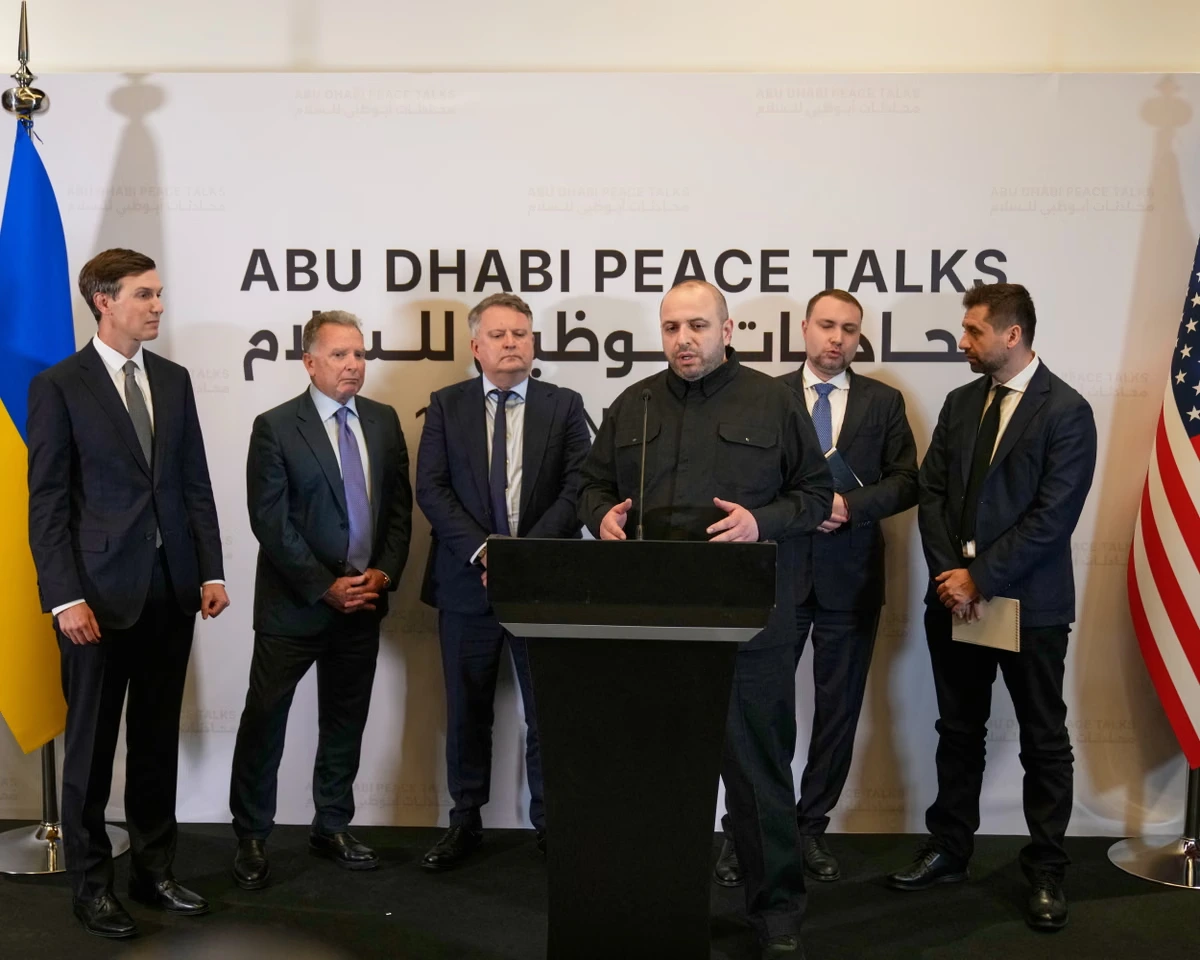
Europe is consumed by two debates that matter less than it thinks, while neglecting one that matters enormously. The first is who should represent the EU in negotiations with Russia. This is largely irrelevant because there is little prospect of serious Ukraine peace talks before the end of winter - despite the fanfare that has surrounded discussions in Abu Dhabi this week. Russia has powerful incentives to escalate the war over the coming months in an attempt to break Ukraine’s economy and civilian morale.
The second is Donald Trump’s approach to Ukraine. This matters less than it once did – and not only because he is now more constrained by a Democratic Congress. Since returning to office in January 2025, Trump has provided no new US military aid to Kyiv. American weapons sales remain important to Ukraine’s war effort, but Trump’s military interventions in the Middle East have further strained supplies of the weapons Ukraine needs most – notably Patriot interceptors.
Ukraine does remain heavily dependent on US early warning intelligence, particularly to detect incoming Russian ballistic missiles, a capability Europe is unlikely to replicate fully before 2030. But the broader point stands: the US is a less indispensable partner to Ukraine than it was two years ago.
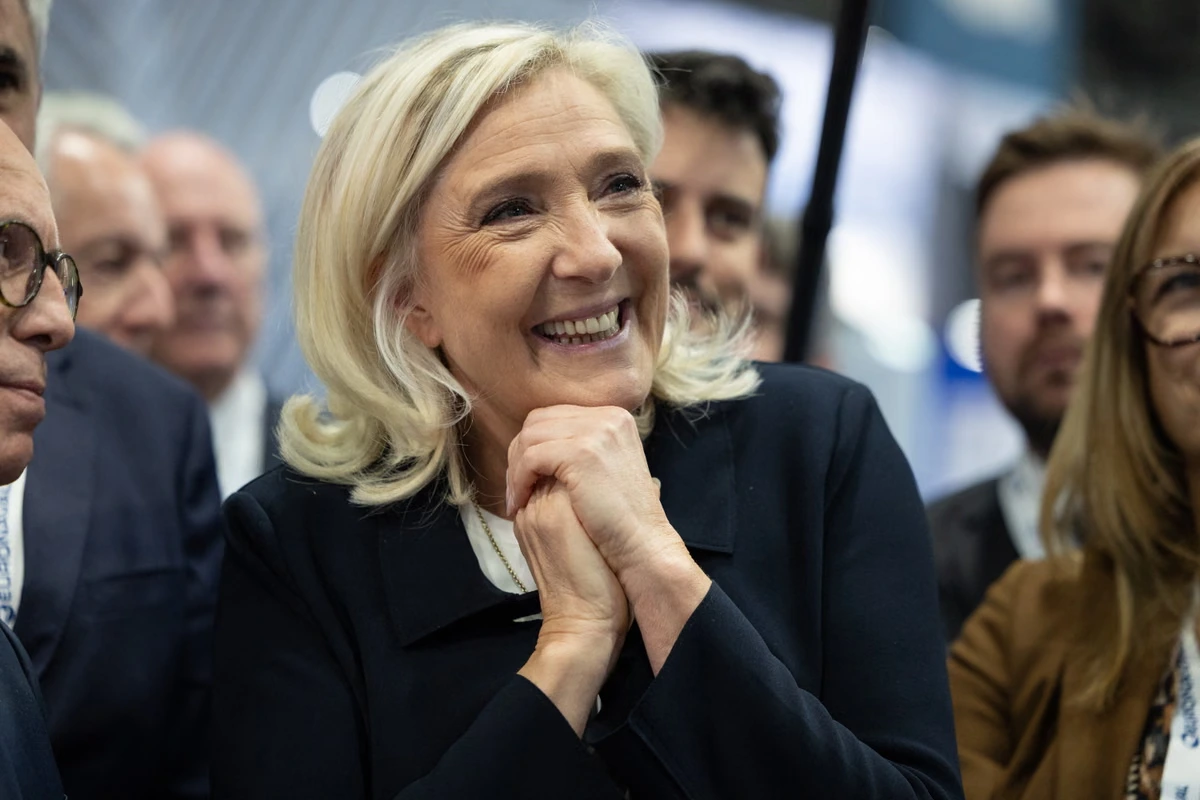
The debate European leaders are neglecting is much closer to home: what happens if Marine Le Pen wins France’s presidential election in six month’s time?
A president Le Pen would suspend France’s bilateral aid to Ukraine. More consequentially, her opposition to increasing France’s contribution to the EU budget could jeopardise EU-wide funding. Le Pen is threatening to veto the bloc’s next seven-year budget, including a proposed €100bn facility for Ukraine. This is the mechanism through which the EU hopes to sustain Kyiv financially beyond 2028.
A Le Pen presidency could also give governments further from the frontline political cover to scale back their support. For Italy, Spain, Greece, Austria, Hungary and Slovakia, Ukraine is a lower priority and Italian support could weaken further after next year’s election.
The resulting bilateralisation of aid could leave a smaller group of northern and western European countries shouldering the burden. They would struggle to compensate for the loss of contributions from much of southern and central Europe.
Le Pen would also threaten Ukraine’s EU membership prospects and the bloc’s sanctions regime against Russia. Ukraine’s membership of the EU would become virtually impossible: key decisions require unanimity, and Le Pen has already opposed Kyiv’s accession. Nor would she be alone in her reluctance. Despite their public commitments, many EU governments harbour serious reservations about admitting Ukraine.
Sanctions would be equally vulnerable. Le Pen has advocated lifting EU sanctions on Russia since 2017. The bloc’s economic sanctions are due for renewal in July 2027, and a French veto could bring them to an end. She could also block the renewal of sanctions against individuals and veto any new packages.
In short, a Le Pen presidency could simultaneously undermine the three pillars of Europe’s support for Ukraine: on financing, EU membership and sanctions on Russia.
Let us imagine for a moment the worst-case scenario – as a result of Europe’s inability to sustain Ukraine after a Le Pen victory, Kyiv is pushed into a settlement on Moscow’s terms. Russia gets constitutional recognition of its annexation of Donetsk and Luhansk (and possibly even Zaporizhzhia and Kherson). Moscow also imposes political and security conditions on Kyiv: a prohibition on Nato membership, a cap on the size of its armed forces, and the political demands Moscow dresses up as “denazification”.
After an unprovoked invasion and almost five years of ruthless Russian attacks on civilians, Ukrainians would see the deal as a humiliating defeat. The humiliation would be greater still if Kyiv signed under pressure from Washington, with support from some parts of Europe and opposition from others.
Above all, the deal would be a humanitarian tragedy. Ceding the rest of the Donbas would leave tens of thousands of civilians under Russian occupation. They would face what occupation has meant elsewhere: mass detentions, forced disappearances and torture. Others, who manage to get evacuated, would add to Ukraine’s internally displaced population.
Because any transfer of territory requires a referendum, Ukraine’s president, Volodymyr Zelenskyy, would have to hold one and would probably put the whole deal on the ballot. Ukrainians would very likely reject it, opening an unprecedented political crisis. If Ukraine could no longer keep fighting, Zelenskyy would face two bad options: overrule the vote and impose a deeply unpopular deal; or resign and leave a vacuum for the next government to fill.
Either way, protesters would probably fill the streets, opponents would challenge the agreement in court and whoever signed it would lose office. The deal would also need to clear parliament, where it could be voted down because few MPs would want their names on it. If it were instead imposed outside the constitution, politics would splinter into factions, some vowing to scrap the settlement and others insisting on moving on.
The economy is likely to follow. Donors and investors who had planned to fund reconstruction would pull back, leaving billions in potential deals on the table. The threat of Russia’s re-invasion and political instability would stall reconstruction. Millions more Ukrainians would then head west to rejoin their families, escaping a deal that fails to provide proper security guarantees and leaving economic devastation behind. At the same time, many soldiers would refuse to lay down their arms and keep up a guerrilla war in the ceded parts of Donbas. These units would be hard to rein in, possibly handing Moscow a pretext to resume full-scale fighting.
Over time, the sense of betrayal is bound to harden into resentment of western partners and Kyiv’s wartime elites alike. Most dangerous of all, Russia would probably use the pause to rebuild its economy and army. Soon, Vladimir Putin may feel tempted to exploit Ukraine’s chaos and invade again. The weak security framework of a deal on Russia’s terms would make this possible. Europe would be left with a broken, embittered and heavily armed state on its border, and an emboldened Russia behind it.
None of this is inevitable. Ukrainians have shown little appetite for capitulation, and weeks of US pressure have not shifted public opinion. Kyiv also understands that Moscow’s terms are probably designed to produce exactly this kind of turmoil. Ukraine would accept such a deal only if it had no other choice.
Getting there would necessitate a combination of things going wrong at the same time: a full US cut-off of intelligence and military support that lets Russia push the front back; European funding drying up with no bilateral substitute; and a Russian escalation backed by new mobilisation. Each is possible; together, they are unlikely. Nonetheless, this scenario should give EU capitals serious pause for thought. Policy should be built on the worst-case scenario rather than wishful thinking that Le Pen, in power, will moderate her view of Ukraine, in the way that Meloni has.
Ukraine’s outlook is bleaker than at any point since Russia’s full-scale invasion in 2022. Putin’s strategy has always been to outlast the west and achieve politically what he cannot secure on the battlefield. That prospect is becoming more plausible – not because Ukraine is losing the will to fight, or even because of Washington’s retreat, but because of what may happen in Europe next year, making it the weakest link in its own strategy to defeat Russia.
-
Mujtaba Rahman is the managing director for Europe at Eurasia Group, a political risk research and consulting firm