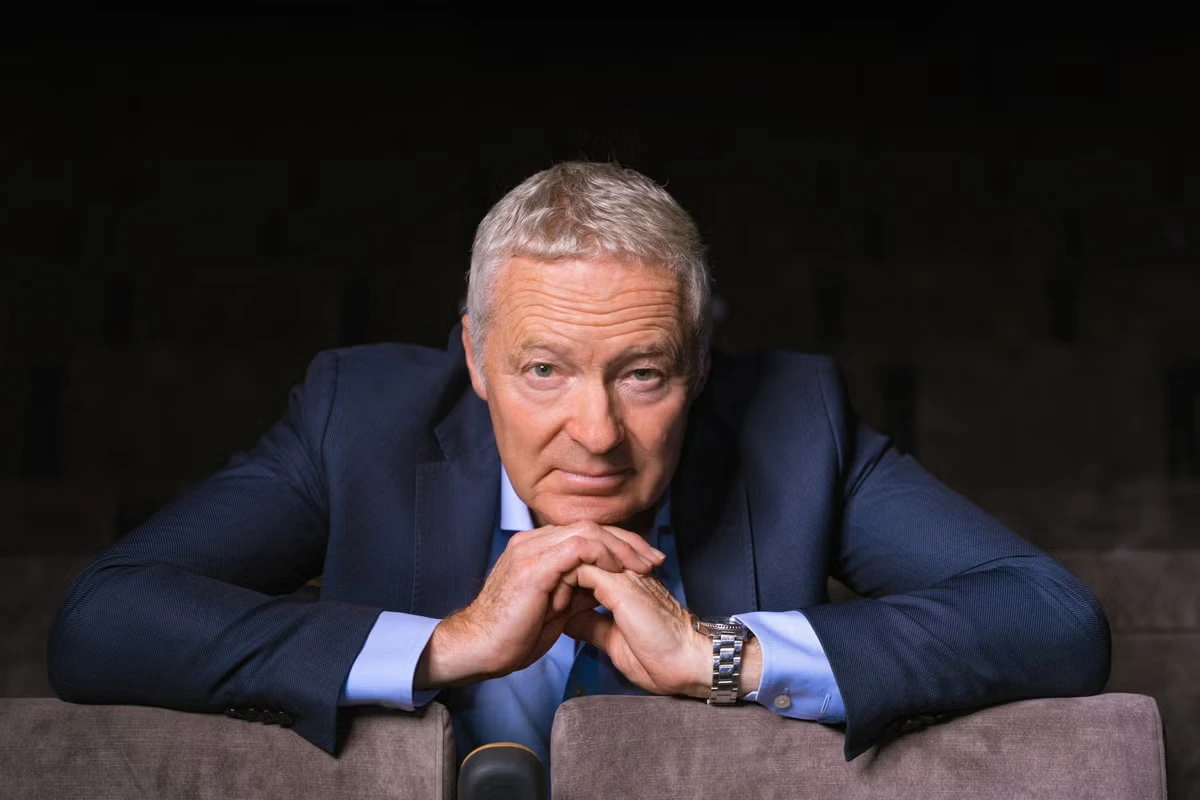
Children with special educational needs (SEND) are being left on the scrap heap when they should be treated as an important national resource, comedian Rory Bremner has claimed.
His comments come ahead of the SEND Matters Coalition launch in Parliament on Wednesday, which has cross-party backing from Labour, Tory, Lib Dem, Reform and Green MPs.
Mr Bremner, who is a patron of the campaign, has spoken out against government plans to educate more SEND children in mainstream education.
The comedian, who was diagnosed with severe attention-deficit hyperactivity disorder (ADHD) as an adult, claims many children end up as Neets (not in education or full-time training) or prison because their mental health issues are not supported properly when they are growing up.
He noted that the Alan Milburn report found that young people with special educational needs and disabilities (SEND) are around 80 per cent more likely to be NEET, while it is estimated that up to half of the adult prison population could be considered neurodivergent, according to the government.
But he also pointed out that many successful people have conditions like ADHD, autism or other special educational needs, with one UK survey showing 40 per cent of entrepreneurs have dyslexia.
“People with these conditions can be a resource for the country, not part of the prison population,” he said.
“The tragedy of all this is that, because of their neurodiversity, some of these minds are some of the best minds that there are – the Elon Musks of this world or the Edisons, or the Einsteins – people who have different neurodiverse conditions... or Alan Turing, some of these brighter minds.
“Tech companies are now actively employing people who are neurodiverse because they want people with that sort of mind. And Dominic Cummings, when he was in government, he wanted minds that were different.”
Looking at his own world of entertainment, he said: “I talk in terms of different. But if minds are different, people think differently. You think about people with ADHD, particularly as there’s a creative restlessness or a restless creativity.
“So there are many people with ADHD in the arts, in acting and film and television and comedy. I mean, I would say seven out of 10 comedians or six out of 10 actors I know personally have ADHD, and it’s kind of our secret sauce.
“If you have ADHD, you can be impulsive, have poor time management, poor organisation generally. But in terms of comedy, you are quick on the ball because you’ve got a brain that’s like a pinball machine and makes connections quickly.”
He noted how his mother used to joke that he could “get lost in a phone box” when he was younger, but he could sit for hours in a cafe concentrating on a script.
Mr Bremner pointed to government figures which show around one in five schoolchildren with identified special educational needs, but said he is concerned about a “small number of them” who need specialist education rather than mainstream schooling.
Department for Education research published in February shows 15 per cent of teachers would not feel confident in identifying SEND children.
“I do not like the government’s plans for there to be a presumption that mainstream is best for all children, and for these ones in particular, it’s the very opposite. It’s triggering. It’s children who are simply unable to cope with the noise, the bustle, the stigma,” he said.
“Also not just for them, but if they’re in a class of 26 or whatever, and you have one child there who is seen as being disruptive, that’s no good. That’s not good for the other 25 if the teacher is unable to cope.”
Referring to a 2023 report commissioned by the National Association of Independent and Non-Maintained Special Schools (NASS), he pointed out: “If you receive the right education, the bonus to somebody is something like £380,000 over the lifetime in value of somebody who is educated appropriately, as opposed to somebody who’s failed.
“Similarly, the cost of special provision in a special school is around, I think, the £60,000 mark. But if that child fails and then goes on to a young offenders institution that’s going to need two or three times that amount.”
The SEND Matters Coalition has been organised with cross-party support from five political parties by former Downing Street chief of staff Mark Fullbrook and former Department for Business and Trade special advisor Joanna Thomas.
Lib Dem MP Chris Coghlan told the campaign launch event that there is a “suicide epidemic” caused by failures by local authorities to support families of SEND children. He repeated the case of Eivie White from Maidstone, who took her life three years ago at age 13, and another teenager called Sharon from his own Dorking and Horley constituency.
He said: “Every time I speak about this, more families come to talk to me about their experiences.”
He noted words from a council whistleblower who said that “council officers joked over the numbers of families they turned down” for support while they avoided direct contact.
The event also heard from Sian Lock, who is now at university but had struggled with SEND issues, and Clifford Jenkyns, a junior SEND ambassador and son of Reform Lincolnshire mayor Dame Andrea Jenkyns.
School standards minister Georgia Gould attended the campaign launch and highlighted the £3.7bn the government plans to invest in special educational needs, including redesigning schools to make them better environments for children with neurodiverse issues.
She said: “There is a huge amount of work going on and a number of groups are feeding into it. This is a big opportunity, but also there will be a big response. We want to make a difference on the ground.”
The Department for Education said: “We have been working closely with parents and professionals to get these reforms right, and the education secretary has been clear that we’re completely committed to the timelines we set out in the schools white paper.
“We inherited a system under immense strain, but our reforms will change that. We will end the postcode lottery felt by so many – widening access to specialists for every school, rolling out training for every teacher, and investing £3.7bn to create 60,000 specialist places across the country.
“Legal duties on schools to identify and support children’s needs are getting stronger, not weaker, and we are retaining EHCPs for children who need them.”