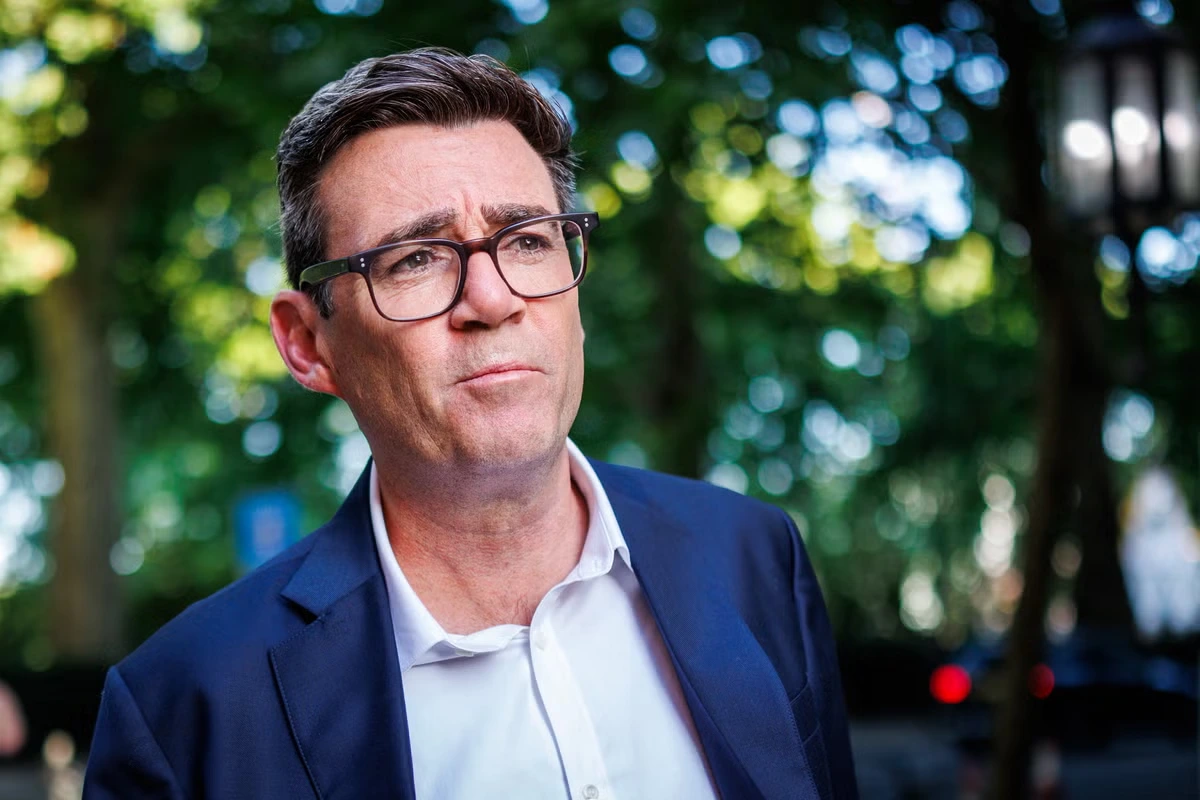
If Andy Burnham’s team are angry with Keir Starmer over a £5bn black hole in the defence budget, they’re going to be livid when they hear about our national debt of £3 trillion.
The new prime minister is – like every other one in recent years – going to face a major structural challenge over Britain’s public finances. We spend more than we raise in taxes, so we borrow and pay interest on the debt. And this year, debt interest will cost something in the region of £110bn, a figure set to exceed £130bn by 2030.
We spend more on debt interest than on defence and policing combined. The debt interest bill is both the cause and symptom of our fiscal dysfunction. If Burnham is to achieve anything as prime minister, “rewire” Britain and restore some much-needed hope to the country, he will have to address the structural gap between the money that comes into the Exchequer and the money that goes out.
For some people, the answer is simply to raise more money through taxes. Rumours are rife that this is what Burnham is looking to do, but publicly he has committed to the Labour manifesto, which rules out changing rates of income tax, VAT, or corporation tax.
Those three taxes are the big revenue raisers for the Treasury. If you don’t change them, you can’t really change the state’s annual income in any major way. Some of Burnham’s allies hope to raise as much as £15bn a year from capital gains tax, but even if – and it’s a big if – that number is realistic, it still won’t touch the sides.
So, sooner or later, attention will come back to spending. Can Burnham find a way to curb overall British public spending in a way that does not cause economic or social harm and does not cause him terminal political damage?
There are lots of ways to control public spending, but many of them are bad. Cutting capital spending – investment in building stuff – is economically harmful. Piling the cuts onto local government and the criminal justice system causes core state functions to crumble. Squeezing public sector pay is politically toxic for a Labour leader.
And to really make a difference, you need to aim for the big-ticket items. That means the welfare bill, which, yes, includes pensions. This year, the UK will spend around £315bn on the welfare system. By 2030, it will be £410bn.
For context, total public spending is about £1.4 trillion. Between them, welfare and debt interest will soon absorb more than a third of all public spending.
Two big trends are driving up welfare spending. Cutting the bill in a compassionate, sustainable way will require addressing them both.
The first is inactivity among those of working age. Since the pandemic, more and more Britons who could work have not been working because they are considered to be too sick. Increasingly, they are mentally, not physically, ill. Incapacity caseloads are forecast to rise from 3.4 million to 4 million, and disability caseloads from 6.5 million to 8.8 million by 2030. Total spending on health and disability benefits will rise by more than £30bn.
Compassionately cutting the amount that Britain spends on people who are economically inactive should have three components. The first is the one that Keir Starmer stumbled over. It is to tighten the criteria applied before someone can qualify for welfare based on an inability to work. The gateway to welfare must be made narrower.
The second component is something that Burnham has started to look at in Manchester and has talked about promisingly in his recent speeches. It is to provide much more support for people to ensure that they either get into work earlier in their life or, if they are already in work, then they stay in work despite episodes of ill health. Remove the reasons people try to get through that narrower gateway, but ensure those who need it the most still receive it.
The third element is the simplest and the hardest part of the cutting agenda. And it is to have a genuine national conversation about the conditions that take people out of the workforce. Have we become too quick to recognise mental health as something that disables a person and removes them from the workforce? The overdiagnosis debate has featured in passing in recent political conversation – Wes Streeting has engaged with it – but has not truly been grasped by any prominent politician. We need to talk honestly about what welfare is – and isn’t – for.
Burnham, with his charisma and a stock of political capital behind him, could just be the politician to have that conversation, which is a precondition of being able to cut into the total UK national spend on inactivity-related welfare.
Which brings us to the second trend driving Britain’s unsustainable finances: an ageing population that demands more and more from the state. Spending on pensioner benefits will – probably – go up by more than £40bn, but since pension costs are driven by the fundamentally unpredictable triple lock (increasing pensions by the lowest of wages, prices and 2.5 per cent), it’s hard to be entirely confident about that.
The same three principles can and should be applied to the amount that the UK spends on pensioner-related payments.
First is straightforward curbs on spending: the triple lock bakes in ever-higher spending on pensions and must be scrapped. And the state pension age must continue to rise.
In isolation, both changes are politically agonising. Hence, the second element of the compassionate cuts agenda comes back in: support. Support more people to work for longer in later life, not least because working for longer is generally associated with better health and happiness. Look at employment law and more flexible phased access to the state pension to support more people to work, perhaps part-time, for longer in later life.
All of this relies on that third element of the compassionate cutting agenda: an honest national conversation. What does the country owe older people? Can we reframe retirement to seem less of a binary choice and working in later life the norm, not the exception?
None of this is simple or easy. But Burnham’s diagnosis that things aren’t working in Britain is right, and it’s right in part because we’re currently locked into a cycle of spending too much and borrowing too much, meaning other parts of the state wither and fail. If Labour doesn’t fix our overspending problem by cutting with compassion, someone else will eventually do it in a more brutal way.