The Royal Navy will deploy a fleet autonomous drone boats to intercept Russian warships and spy vessels around British shores for the first time, the head of its fleet has confirmed.
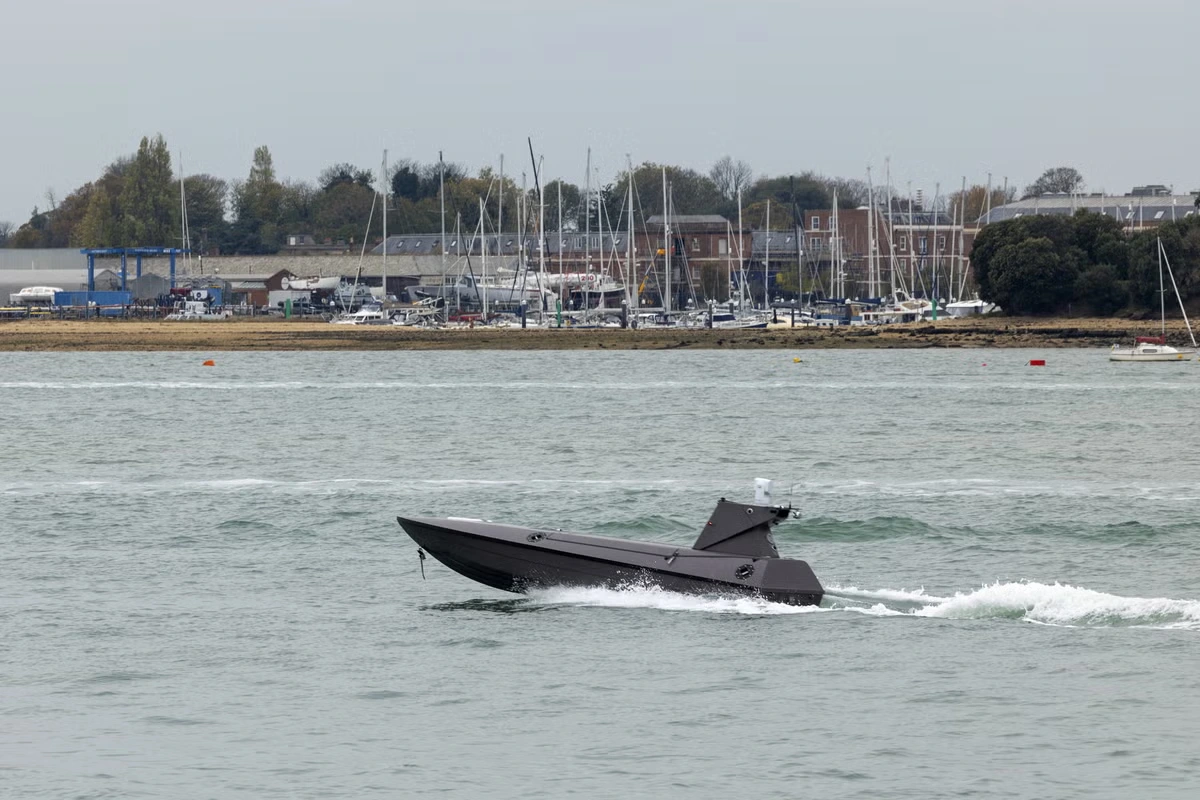
The squadron of autonomous Kraken 3 boats, which are unmanned and remotely controlled, will be used to help the Ryoal Navy’s fleet of vessels to tackle Russian interference in UK waters.
Vice-Admiral Steve Moorhouse told The Times the boats will begin operations “as soon as possible”, meaning they could be deployed before the end of the year.
He said: “With Russian vessels, you can use these sorts of craft. You don’t necessarily have to use a Type 23 [frigate], a batch one patrol vessel or something else.”
He told the paper the squadron has been split into two watches, so that operations can be sustained “around the clock”.
Deputy commander of the surface flotilla, Captain Adam Ballard, told the BBC: "This is about a Navy that is truly hybrid, and so you take the benefits of both types - the amazing capability and flexibility of these systems along with a carrier strike group."
He added: "It's a really, really potent fighting force."
The 8.4 metre long boats have a top speed of 55 knots, and can endure up to 30 days out at sea on a mission.
The creation of the new squadron, which was formally launched at Portsmouth on Thursday, is part of a move towards a “hybrid navy” with £1.5 billion being earmarked for the initiative over four years.
Defence secretary Wes Streeting said the creation of the force is in response to the changing face of modern warfare.
Mr Streeting said: “The threat environment we are facing is fundamentally different from that of recent decades. A major determinant of military power now is who can innovate fastest.
“That’s why we are using the biggest sustained increase in defence spending since the Cold War to put the latest autonomous technology in the hands of our sailors, to help them protect our shores and those of our Nato allies.
“The more ready we are to fight and win, the less likely we are to have to. This investment strengthens our warfighting readiness and therefore our deterrence.”
The deployments come as Britain steps up efforts to prevent Moscow’s interference and surveillance in UK waters, and disrupt Russia’s use of shadow fleets to transport oil and circumvent Western sanctions imposed over the war in Ukraine.
The Royal Navy recently intercepted Russian warships and tracked a spy ship monitoring Nato military exercises off Scotland.
The operations, spanning 17 days, saw British forces monitor Russian vessels near allied military exercises and shadow ships carrying sanctioned cargo through the English Channel.
The Russian intelligence-gathering ship Viktor Leonov was operating near the Outer Hebrides as more than 2,000 personnel from six Nato nations took part in Exercise Strike Warrior off Scotland.
In June, Royal Marine Commandos and National Crime Agency officers boarded the Smyrtos, a sanctioned shadow fleet tanker, during a six-hour operation in the English Channel. The seizure formed part of wider efforts to enforce sanctions and restrict Moscow’s oil revenues.
Concerns over Russian activity extend beyond the sea. An investigation by The Independent earlier this year found that 340 drone-related security incidents were reported at or near Ministry of Defence sites in the year to August 2026, up from 126 in 2024.
Last month, new analysis suggested Russia is sending fishing trawlers to track and spy on the UK’s critical network of undersea cables.
Ministers said Vladimir Putin is using “commercial proxies” as part of his espionage strategy to map the exact locations of the cables, which link the UK with the US and Europe, in case of conflict. Any sabotage to the network risks huge disruption to banks, hospitals, mobile phone networks, and other vital services.
An analysis published on Thursday by The Telegraph found more than 500 incidents of Russian trawlers loitering over the lines, or following them for miles, have been recorded.