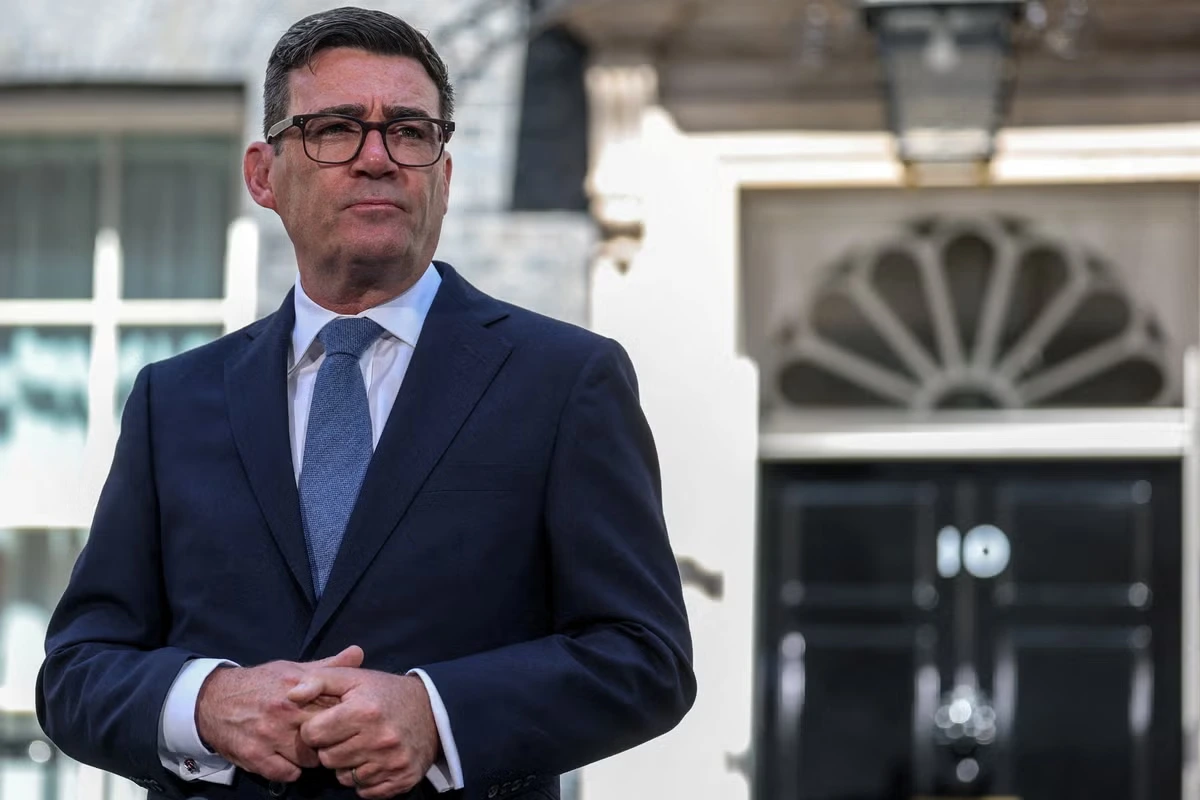
Andy Burnham’s first two weeks as prime minister have been marked by a flurry of policy announcements, as the former mayor has looked to mark a clear departure from his predecessor.
It has been successful opening according to the leader’s approval ratings, which have skyrocketed since he entered Number 10. Mr Burnham now sits at a net 19 point approval rating, according to a recent More in Common poll, higher than Sir Keir Starmer achieved at any point in office.
Writing as he reached a fortnight in power, Mr Burnham said his government will have a “clear political direction, rooted in the values [the Labour] movement was built on.”
“I’m not going to be shy about it: this is the start of a complete rewiring of economic and political power in Britain,” he wrote for LabourList.
Initially focusing on the cost of living, the early policy pledges have now spanned to education, social care, immigration and more.
More detail on many of the announcements can be expected from chancellor John Healey’s first Budget, confirmed to be taking place on 28 October. This is when he will lay out the crucial details on how the funding will be raised for the plans, which experts have warned could spell tax rises to come.
Here are the policies that have been confirmed by the Burnham government so far:
One of Mr Burnham’s first moves was to scrap VAT on household electricity bills from October, expected to cut £45 from the average household’s energy bills.
The Treasury said the VAT cut would cost around £850m this financial year and would be funded by cancelling the government’s planned Digital ID programme.
However, the Office for Budget Responsibility (OBR) highlighted in November that the cost of the Digital ID scheme was “unfunded”, as it was based on savings from departmental budgets not yet identified.
Mr Burnham also said that he is looking at energy bill standing charges and water bills in an interview with The Mirror at the start of August.
The £2 bus fare cap has been reinstated, Mr Burnham announced on the third day of his premiership, reversing the decision to increase it by his predecessor Sir Keir Starmer.
Reinstating this maximum fare will partly be funded by switching grants for international climate projects to repayable loans instead.
The cost of train travel may be Mr Burnham’s next target, as he told The Mirror on Sunday: “I think rail fares are too high, outrageously so in some instances. So that's something that's in my sights.”
Mr Burnham used his inaugural speech to say that his “first instruction” will be to “end rough sleeping in our country.”
In further details set out by Number 10, £340 million funding was announced to go towards acquiring suitable homes, identifying those most in need and starting to provide housing and support “without delay”.
The funding will provide 1,200 homes and intensive support for at least 3,000 long-term rough sleepers over a five-year period, the government said.
One of Mr Burnham’s flagship proposals is the creation of an outpost of Downing Street based in Manchester, dubbed “No 10 in the North”.
Heron House, an existing government building partially occupied by GCHQ, is serving as the interim headquarters with Mr Burnham vowing to work from the location one day a week.
Business rates for pubs, clubs and music venues in England will be cut by 20 per cent, Mr Burnham has announced, delivering on a pledge he made on the campaign trail.
The new rates will take effect from April, saving the typical pub an estimated £1,100 according to the government.
The £100m package will be fully funded, it adds. This will be partly through a review of reliefs for businesses that “do not make a positive contribution to local communities”, such as vape shops.
Metro mayors across England will be granted new powers to retain a portion of locally raised tax revenue under fresh devolution plans.
Mr Burnham confirmed the policy during a visit to Leeds, stating that regions need “true financial autonomy, not just hand-outs from Westminster.”
The policy will allow more mayors to keep a portion of business rates raised in their area from spring, and eventually a percentage of income tax raised locally.
Mr Burnham has announced a major shake-up to the education system, designed to rebalance its focus away from university and towards technical qualifications.
Under the plans, students will have the option to combine core academic subjects like English, maths and science, with technical education linked to jobs available in their area.
This route will be available from age 14, in Year 10. Students taking this pathway will also spend time with employers to gain work experience.
Mr Burnham has promised a sweeping reform of the social care system, vowing to immediately begin empowering the work force by integrating staff with the NHS to boost pay and security.
The prime minister also announced that he would expedite Baroness Louise Casey’s commission into social care, bringing its deadline forward from 2028 to next year.
The prime minister has pledged that the government will be “relentless” in lowering the number of people arriving to the UK on small boats.
His comments came as he backed new Home Office statistics that show that the number of National Crime Agency (NCA) officers who tackle smuggling gangs enabling small boat crossings has risen to almost 800 from 376 at the start of last year – a new record.
On defence, Mr Burnham has announced a £8.4bn investment in the UK’s nuclear deterrent in the fourth phase of the UK’s Dreadnought Class submarine programme.
The Ministry of Defence has said this will boost the number of jobs on its nuclear programme from 47,000 to 65,000 by 2030, including 20,000 apprenticeships by 2035.