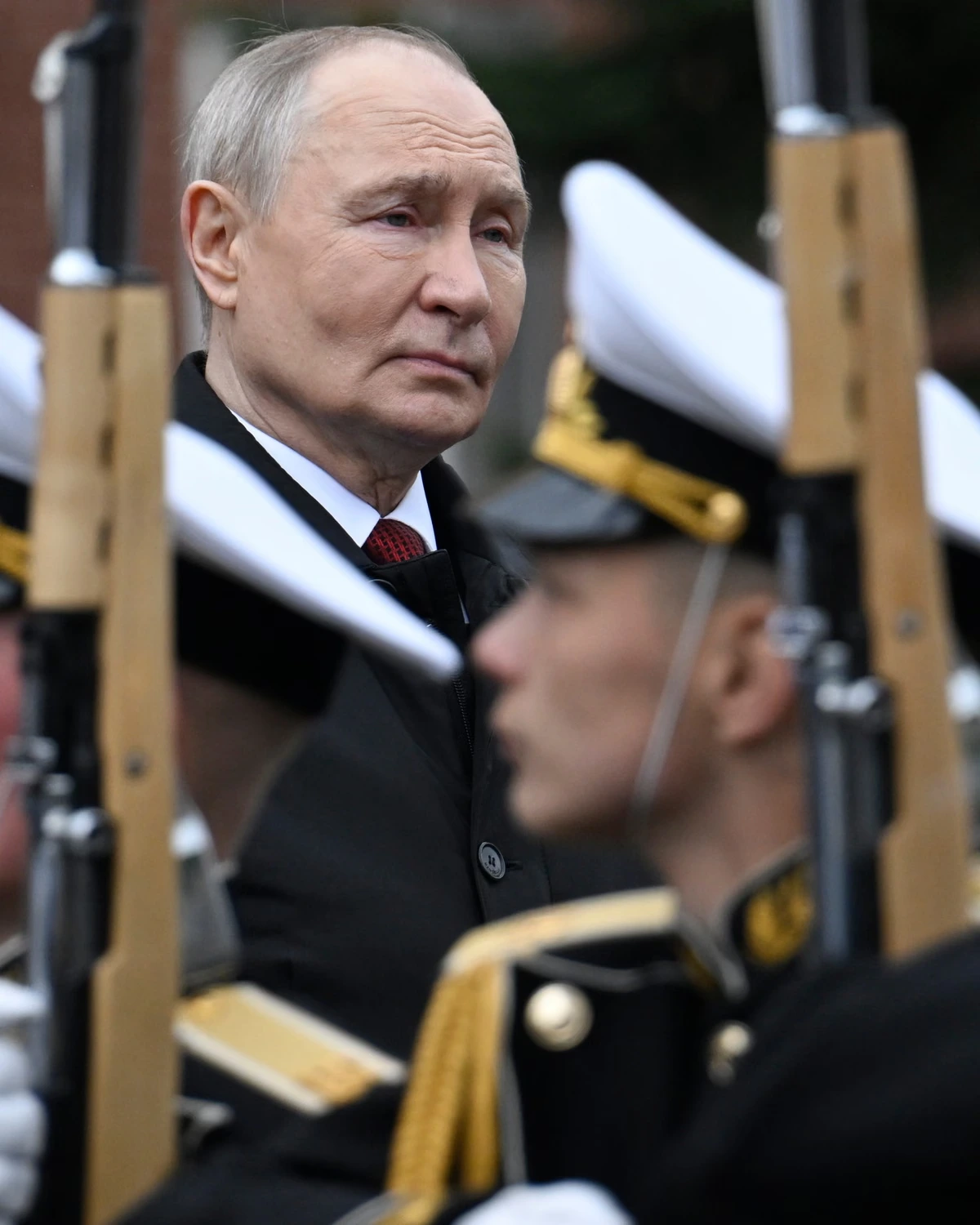
Vladimir Putin pulled up to a hotel in central Moscow earlier in May in a Russian-made SUV, dressed casually in jeans and a light jacket. Carrying a bouquet of flowers, he walked unhurriedly into the lobby and embraced his former schoolteacher Vera Gurevich, who kissed him on both cheeks.
He then helped Gurevich into his car and drove her to dinner at the Kremlin.
It came just a day after several western media outlets, citing a European intelligence report, claimed Putin had spent weeks hiding in an underground bunker, gripped by fears of assassination or even a coup.
The televised meeting was carefully crafted to reinforce a very different image of the Russian leader, one which he has refined over 25 years in power: the approachable, confident president, a man of the people casually dropping in on an old teacher.
But while fears of an imminent coup are exaggerated, there is little doubt that Putin is entering the most challenging period of his long rule. Interviews with several people in the orbit of the Russian leader, as well as sources in the Russian business world and western intelligence officials, paint a picture of an isolated leader surrounded by an elite that is becoming rapidly disillusioned, both with the faltering war in Ukraine and the economic downturn at home.
“There’s definitely been a shift in mood among the elites this year … there is profound disappointment in Putin,” said a well-connected business leader, adding that there was “a growing sense that some kind of catastrophe is looming”.
“No one believes everything will suddenly collapse tomorrow,” the source said. “But there is a growing realisation that utterly senseless, self-destructive decisions keep being made. People who once defended Putin no longer do. Any sense of a future has disappeared.”
Putin’s approval ratings are slipping, the economy is under mounting pressure, and even pro-Kremlin bloggers who have rarely criticised the president are beginning to speak out.
Despite the cracks emerging at home, Putin’s calculus on the war in Ukraine has not changed, and he remains determined to press on, according to interviews with multiple people familiar with his thinking, as well as European and Ukrainian intelligence officials.
Putin has made clear to his inner circle that he believes Moscow can capture the entirety of the Donbas region by the end of the year, two sources with access to the president said. “Putin is fixated on Donbas and he will not stop before that,” one of them said.
Speaking after the 9 May Victory Day parade – scaled back amid fears of Ukrainian drone attacks – Putin surprised many by suggesting the war was “coming to a close”. The remark made headlines, but those familiar with his thinking caution that it should not be interpreted as a sign he is prepared to compromise. Instead, it suggests Putin believes a military breakthrough is imminent.
A Ukrainian intelligence official said Russian generals had convinced the Russian leader that the Donbas would be taken by the end of the year. “Fabricated reports [are] being fed up the chain of command, claiming victory is imminent,” the official said.
That bravado is not currently reflected on the battlefield. Military analysts say that, at the current pace of advance, it could take Russia years to fully capture the Donbas.
It remains unclear to what extent Russia’s military and security services are presenting Putin with an overly optimistic picture. “Even if many around him understand the reality of the situation, we still don’t know what Putin himself understands. That’s the most difficult part,” one senior European intelligence official said.
“Of course, officials and the military paint a rosy picture for the president,” a person familiar with discussions in the Kremlin said. “They lie to him. That’s how the system Putin has built works.”
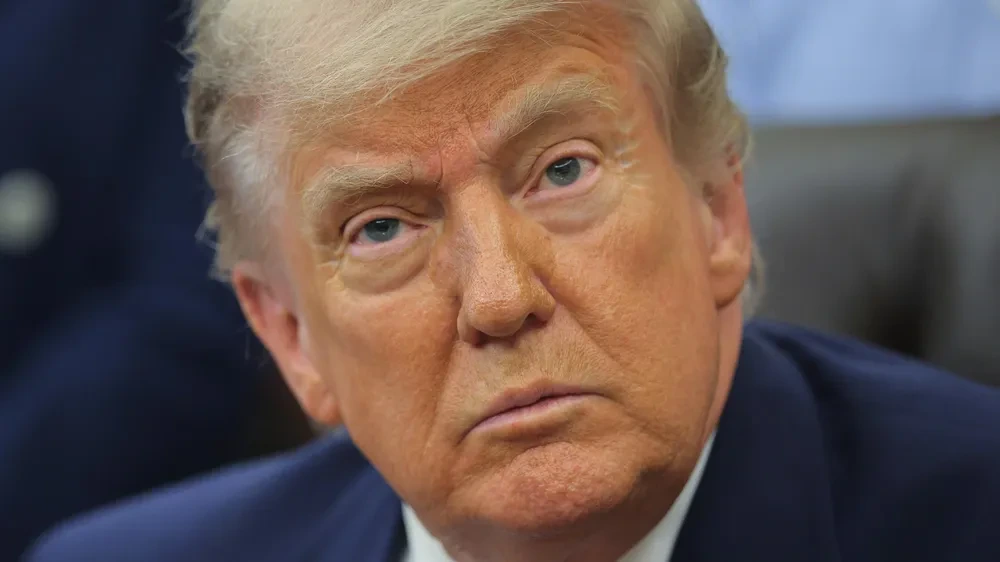
Another factor in Putin’s decision to fight on is that the Russian leader has lost faith in Donald Trump’s ability to pressure Kyiv into surrendering territory as part of a deal, according to one source close to Putin and another involved in backchannel talks.
“There was this widespread optimism in Moscow that Trump could deliver the Donbas after his election. It has largely evaporated,” one source in contact with Putin said.
Though Trump has in recent days repeatedly touted that the war in Ukraine is coming to an end – with US help – the Russian leadership increasingly sees little value in continuing negotiations with Washington. Ukraine has acknowledged that Trump’s envoys, Jared Kushner and Steve Witkoff, repeatedly pressed it in a series of meetings to withdraw Ukrainian troops from territory it still controls.
But Kyiv also has dramatically reduced its dependence on Washington, while stepping up its own military production. The unblocking of a €90bn EU loan and deepening military and intelligence sharing ties with European allies have further diminished US leverage over Ukraine, and Kyiv is not minded to make concessions on territory in the absence of ironclad US security guarantees.
For now, Moscow’s goal is the capture of the Donbas, and Russian negotiators have made clear that Moscow would be ready to sue for peace once this happens. Yet those close to Putin say his ambitions may increase if he senses Ukraine beginning to collapse. Then, two people familiar with his thinking said, he could push further, crossing the Dnipro River, in an attempt to seize all four Ukrainian regions that Russia claimed to annex in 2022 but still does not fully control.
“He is not a long-term strategist,” one of them said. “His appetite grows as he eats.”
Discontent at home
Ripples of dissent in society began surfacing earlier in 2026, when the Kremlin banned or restricted most messaging apps while preserving access only to a state-backed alternative.
Mobile internet across central Moscow and other regions has been intermittently disrupted or shut down entirely, causing Russian businesses to complain of billions of roubles in losses.
The shutdowns prompted dark humour among Moscow’s elite. “At the dinner table, everyone talks about the internet. We are now somewhere closer to North Korea,” one Kremlin insider said. China’s internet controls, once routinely mocked in Russia as a symbol of censorship, are now discussed with a degree of envy.
The internet shutdowns are being overseen by the powerful second service of the FSB, a feared department within the security services responsible for the poisoning of the late opposition leader Alexei Navalny.
At the same time, figures within Russia’s political elite – including the Kremlin spokesperson, Dmitry Peskov, and the first deputy chief of staff, Sergei Kiriyenko – have privately tried to steer Putin away from some of the harsher restrictions, but with no success, according to two people familiar with the discussions.
“As long as the war continues, Putin will favour the security services,” said another figure close to the Kremlin.
“The issue with the internet is a very sensitive one for Russian society. And it has sparked a huge wave of outrage,” said Ksenia Sobchak, a well-connected Russian journalist and daughter of Putin’s former political mentor, in a telephone interview.
Sobchak said it was only a matter of time before Russian authorities went even further and moved to block all western social media platforms, forcing people on to domestic alternatives. She predicted the move could come as early as next year. “I think a decision has definitely been made to do that,” she said.
For many Russians, the year has also brought higher taxes and rising inflation, with a sputtering economy forcing businesses to close and sending the cost of groceries and household bills soaring
Taken together, Putin appears to have broken one of the unwritten social contracts underpinning his rule since the invasion began: that ordinary Russians could largely ignore the war so long as daily life remained stable.
Across Russian social media, frustration with the authorities has become increasingly visible. Videos showing small business owners railing against higher taxes, residents complaining about repeated internet shutdowns, and farmers in Siberia furious over mass livestock culls ordered by officials have gone viral.
Russia’s general happiness index fell to a 15-year low in April, a state pollster reported, and several polls have shown Putin’s approval rating falling to its lowest point since the start of Russia’s full-scale invasion of Ukraine.
“Putin follows his approval closely. He has monitored the polls obsessively since 1999,” said Alexei Venediktov, a former editor of the radio station Echo of Moscow, which was forced to shut down after the war began.
Venediktov recalled how Putin once waved polling figures showing overwhelming public support in front of him shortly after the annexation of Crimea – a move the journalist opposed – telling him: “You are not with the people. I am with the people.”
Coup?
While it is clear that discontent is rising among the elite and the population, most analysts believe that if a real threat to Putin’s regime does emerge, it will come from his inner circle, not from the street.
One of the more striking claims reported earlier this month, sourced to an intelligence report produced by an unnamed European country, was the suggestion that the former defence minister Sergei Shoigu could emerge as a threat to Putin. However, an imminent Kremlin coup is regarded by many supporters and critics alike as far-fetched.
Russia’s security services, with Putin’s approval, have arrested several of Shoigu’s closest associates and friends, further isolating the once-powerful former minister amid speculation he himself could eventually be purged.
“Shoigu has no popularity in the army and no support base,” said a former senior official who knows him personally. “He will never move against Putin.”
Dissent is also unlikely to come from Russia’s oligarchs. Many are privately horrified by the war but remain silent, fearful of speaking out, said the leading Russian businessman. Recent months have brought fresh purges and a new wave of state seizures targeting private businesses, most notably the arrest of Vadim Moshkovich, the billionaire founder of a major agricultural firm.
“The business elite are playing Russian roulette. They hope their neighbour gets hit while they are spared,” said Oleg Tinkov, one of the few Russian business leaders who spoke out against the invasion and fled the country.
“Who is going to move against him? Everyone is simply waiting for his demise,” Tinkov added.
The Russian president has meanwhile increased his travel schedule in recent weeks, in what appears to be a deliberate attempt to counter narratives over his security and alleged paranoia. “Putin has always been obsessed with his security, but it is wrong to suggest he is hiding,” said one person close to the Kremlin who recently met the president.
“Yes, there is nervousness among the elites. Yes, there is uncertainty. But talk of an existential threat to Putin’s rule is premature. He remains in control.”
The senior European intelligence official said many at the top were “currently in the acknowledgment phase”, recognising the mounting problems both on the battlefield and in the economy, but without plans to counter them.
“They understand it’s a trend downwards. But I haven’t heard of them asking ... ‘What should we do about it then?’”